Tuesday 15th October, Harris Reed's Sustainability & Concepts.
- arturonp05
- Oct 15, 2024
- 4 min read
Updated: Nov 16, 2025
Today in studio my group and I began thinking about concepts. We began by doing further research on the client, understanding his aims, creative process and above all understanding his aims for sustainability. Reed focuses on sustainable practices, working with found materials and transforming precious, forgotten fabrics that would have otherwise been discarded. Calling upon over-consumption and the importance of valuing the quality and durability of garments.
The “Encore” collection from September 2024, uses silk wallpaper panels, vintage lace table clothes, damask drapes, bedspreads, upholstered fabrics, headboard fabric and antique curtains, a true fascination with Interior fabrics. Dramatic silhouettes are constructed through oversized structures, collars and corsets to create architectural shapes that contrast with the fluidity of the draped fabrics showing the beauty in structure. Many of the French materials used dated back the 19th century, such as the corseted jacket featuring a 1900s French silk damask curtain adorned with dramatic black velvet bows.
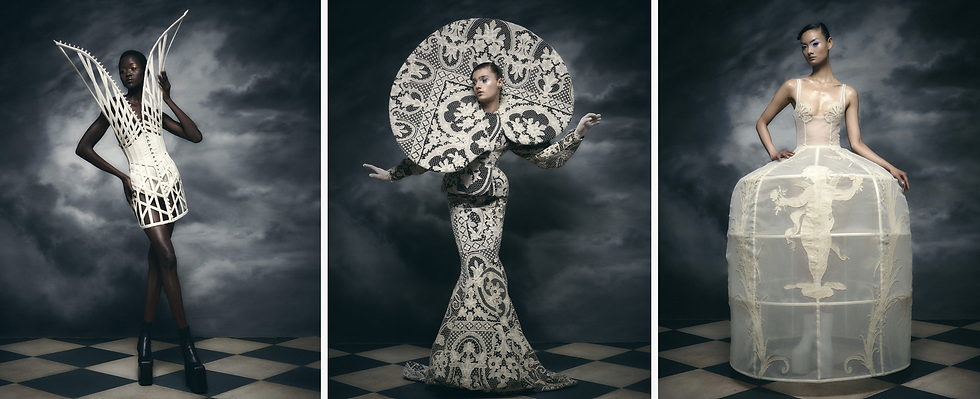
Encore, September 2024
The “Shadow Dance” collection from February 2023 uses silhouette driven designs once more and Reed worked with Fromental to repurpose their luxury, hand painted, silk wallpapers and fabrics into unique sculptured pieces curated with a high level of craftsmanship. One last example is the “Sixty Years a Queen” collection from February 2022, Reed sourced materials from donations from the Bussandri family, and the sequins adorning the pieces from deadstock from a London supplier.

Shadow Dance, February 2023

Sixty Years a Queen, February 2022
In response, we came up with three words that best describe him: "Silhouette," "Character" and "Transcend" I continued by drawing some of Reed’s outfits focusing on the shape and colour, I find that by deconstructing each component I am able to better understand and connect with the outfits, as each one has its own character and persona. After I looked at fabric itself, exploring how it folds and create different shadows, tones and shapes. ‘Encore’ uses textiles with beautiful, embroidered details to show leaves and angels and this made me think; “what if I used embroidery to tell the story of these outfits?” This could be a fun, unique and engaging way of presenting information visually, which can be understood by everyone, similar to a tapestry.


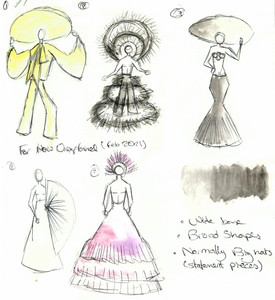
Sketches analysing silhouette.


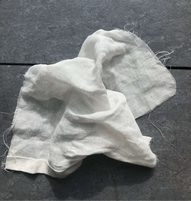
Photographs of fabric exploration.


Another concept I came up with was using interesting pieces of shaped glass to bend and focus light on a specific point in a room. I came across this idea when I was holding a glass of water and the light coming into the room went through it and because of the shape and texture of the glass, a stunning pattern was projected onto the wall, which reminded me of how much Reed, loves lighting. In response, I made watercolour paintings, as water is fluid which is a word constantly used by the client to describe himself and his work. After, I went back and re-watched Reed’s interview with Architectural Digest to see if there was anything that I had missed out on.


Light being bended by water in a glass.

Watercolour drawings in response to the previous photographs.
In the video Reed says “I love velvet, it’s just delicious, just so yummy and is so fabulous” and in his bathroom there is a velvet curtain that can wrap around the bathtub and in his words “cocoons you away from the world ” so I thought what is we used curtains to divide spaces in the exhibition? Reed’s collections are so different I wanted to give everything its own dedicated space while using curtains to divide space and this links back to fabric which I have already been looking at. While thinking about space I realised that some rooms in the middle might have little light to no natural sources of light, and this is where we could really take advantaged of what we can do with light manipulation and create our own sources of light. Going back to the video everything in the house is really funky such as the lighting because Reed said the aim of the London house was to “create a fun safe, queer space, because England is so grey.” So at this point I knew that Harris Reed’s house would be the main precedent and that the exhibition would be inviting visitors into the personal life of Harris Reed, taking them through his creative processes. One last thing that I noted was when Reed was “growing up in Arizona I would just stare at the ceiling, dreaming of a better place, so every time I ever create, I look up” because of this, ceilings have become an emblem for “hope and creativity” so this is one other concept I will explore.
Now the group had numerous ideas for concepts and we began thinking how we could apply them in the space, looking at precedents was the next step.

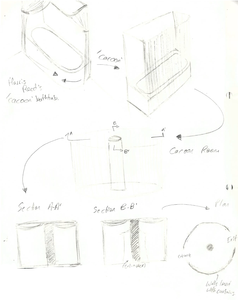
Understanding the 'Cocoon' bathtub structure through graphite pencil sketches

Understanding the 'Cocoon' bathtub, through graphite and colour pencil sketches.

Reed's Architectural Digest interview video.


Comments