Textiles are part of the future of design.
- arturonp05
- Mar 23, 2024
- 3 min read
Updated: Nov 16, 2025
Everybody knows about textiles, they are materials made from fibres, thin threads or filaments that can be both natural and synthetic and sometimes a combination of the two. (ProductIP, 2021) However, many people do not realise the connections they can have with design in architecture.
In this blog, I will specifically discuss African textiles as I see very little conversation surrounding them in the world of design in architecture. The history of textiles in Africa begun when the Dutch colonised Indonesia, discovering batik fabrics where they then developed ways to mass produce it, using machines. These cheap imitations were not popular in Indonesia however; they were well received in West Africa in the 1880s. (Your Complete Guide to African Print Fabric | Kitenge, 2020) There, many techniques for producing similarly styled fabrics were then developed.
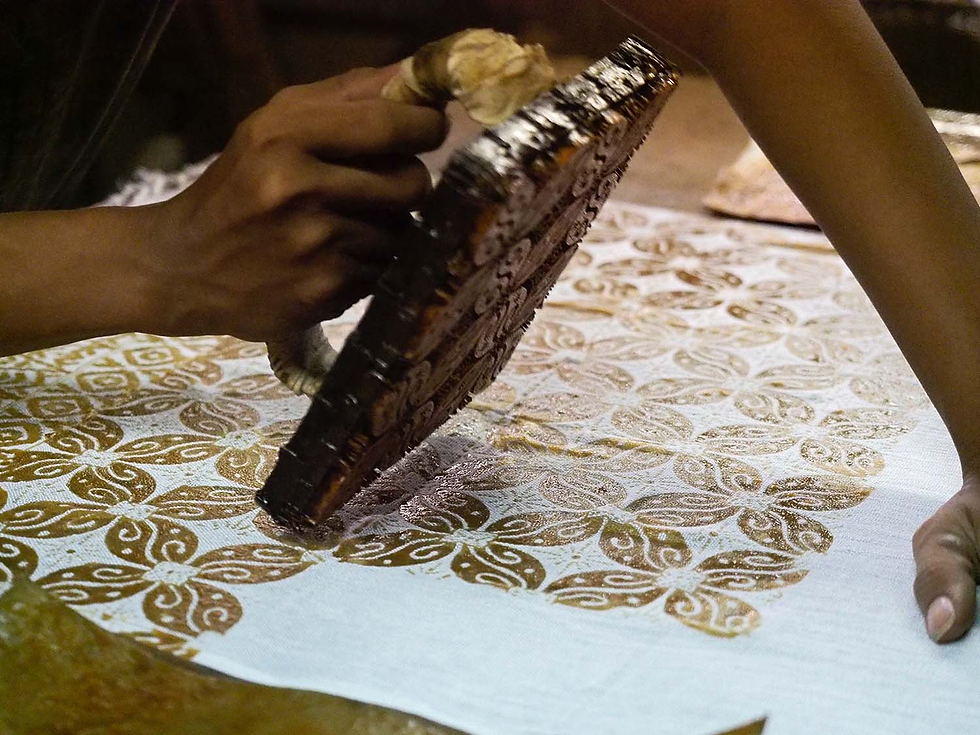
Printing to create Batik Fabric
Firstly, it goes without saying that Africa is a huge continent with a variety of cultures and traditions, these few examples just show the variety of textiles in Africa. These fabrics can sometimes be understood as a way of non-verbal communication, the colours and symbols used in each print and design can symbolise a tribe, marriage, and the social status of the person wearing the fabric. (Your Complete Guide to African Print Fabric | Kitenge, 2020) One example is Okene cloth from Nigeria, it is hand woven from cotton and plant stem fibres, it can take about three weeks to produce five yards of cloth and can be stitched or wrapped into various garments for people. (dolapo, 2023) Another example is Ankara where different layers of polychromatic dyes are printed on cotton cloth, in a variety of patterns. It is used to make bags, accessories, shoes, homeware, clothing and quilts. (V&a · Cloth of a Continent: Africa Fashion, n.d.) But how does this relate to design in architecture?

Open robe, Shade Thomas-Fahm, 1970s, Nigeria. Museum no. T.6-2022. © Victoria and Albert Museum, London

Open robe (detail), Shade Thomas-Fahm, 1970s, Nigeria. Museum no. T.6-2022. © Victoria and Albert Museum, London

'Classic' robe, by Lisa Folawiyo, 2021, Nigeria. Museum no. T.46:1-2022. © Victoria and Albert Museum, London
Well, architects such as David Adjaye have been integrating African textiles into their work. In his words each textile: “Derives from a unique craft that has emerged from the particular histories and geographies of its makers.” … “Art must draw on context to be emotionally resonant and culturally relevant. Otherwise, it is empty.” (Adjaye, 2017) Textiles were designed to be worn, lived in, and interacted with, Adjaye has taken these elements and painted them into the form of a room, capturing the essence of it by combining the spirit of the textiles with the architectural elements of a space. He is known for infusing his artistic abilities into community buildings. (Hewitt, 2017)

Textile Structure by David Adjaye
As explored in previous blogs our world is progressively becoming more and more minimal and as people continue to crave colour in architecture more often, it is likely that we will see art inspired by the patterns, colours and stories of African textiles, incorporated more often into our buildings whether it is through fabric, wallpaper, stained glass, tiles or murals. What do you guys think of this? Do you agree?
Bibliography:
ProductIP. (2021, March 8). What are textiles? -. Www.productip.com. https://www.productip.com/kb/productipedia/compliance-resources/what-are-textiles
dolapo. (2023, February 2). Types of African Textiles- The Glossary Project - Urbanstax. https://urbanstax.com/types-of-african-textiles-the-glossary-project/
Your Complete Guide to African Print Fabric | Kitenge. (2020, March 14). Kitenge Store. https://kitengestore.com/everything-need-know-african-print-fabric/
V&A · Cloth of a continent: Africa Fashion. (n.d.). Victoria and Albert Museum. https://www.vam.ac.uk/articles/cloth-of-a-continent-africa-fashion
Hewitt, C. (2017, October 27). David Adjaye — Textiles. Africa. Architecture. Design Journal. https://medium.com/design-journal/david-adjaye-textiles-africa-architecture-4f8e29e325e3
Image Credits:
Cover Image: Monsy, N. (2023, November 16). Inside the World of Textiles: African Textile Design. RTF | Rethinking the Future. https://www.re-thinkingthefuture.com/architectural-community/a11371-inside-the-world-of-textiles-african-textile-design/
What is Batik Fabric? Origins, How It’s Made and Uses. (n.d.). Www.dalstonmillfabrics.co.uk. https://www.dalstonmillfabrics.co.uk/fabricblog/what-is-batik-fabric#:~:text=History%20of%20BatikV&A
Cloth of a continent: Africa Fashion. (n.d.). Victoria and Albert Museum. https://www.vam.ac.uk/articles/cloth-of-a-continent-africa-fashion
Cooper Hewitt “David Adjaye Selects.” (n.d.). Adjaye Associates. Retrieved May 4, 2024, from https://www.adjaye.com/work/cooper-hewitt-david-adjaye-selects/


Comments